
Iron Oxide Pigment Quality Testing Supports Consistent Production
Iron oxide pigment quality testing is an important part of selecting reliable raw materials for colored concrete, coatings, paving blocks, and other industrial products. Although pigments may appear similar in their original powder form, differences in coloring strength, dispersibility, and chemical properties can affect manufacturing results.
For manufacturers purchasing pigments in large quantities, evaluating material quality before production helps reduce the risk of inconsistent colors, processing difficulties, and unnecessary material costs.
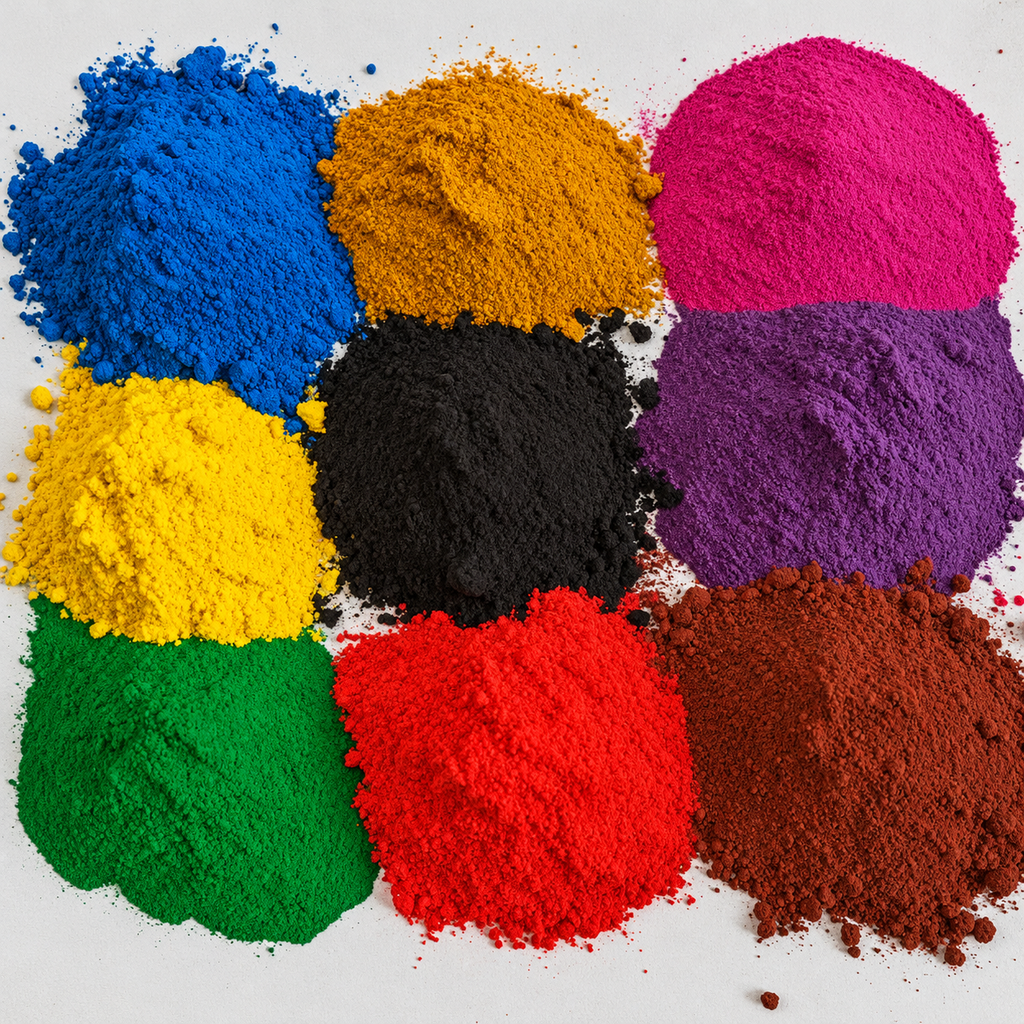
Color Strength Determines Pigment Performance
Tinting strength is one of the important indicators used to evaluate iron oxide pigments.
It describes the ability of a pigment to produce color under defined testing conditions.
Two pigment grades may have similar visible shades but different tinting strengths. As a result, the quantity required to achieve a specified color may vary.
Manufacturers should compare pigment samples using a consistent formulation, mixing procedure, and reference standard.
Color measurements may also be used to evaluate differences between production batches.
Particle Characteristics Affect Pigment Dispersion
The physical characteristics of iron oxide pigment particles influence their behavior during mixing and processing.
Poorly dispersed pigment can produce visible streaks, concentrated color areas, and inconsistent surface appearance.
Quality evaluation may include fineness of grind, sieve residue, and dispersibility testing.
These measurements help manufacturers determine whether a pigment grade is suitable for the intended production process.
The appropriate requirements depend on the application. A pigment intended for cement products may require different evaluation conditions from a pigment used in liquid coatings.
Chemical Properties Require Technical Verification
Iron oxide pigments used in construction materials should meet the relevant chemical and physical requirements.
Depending on the application, important characteristics may include water-soluble content, alkali resistance, and stability under environmental exposure.
For integrally colored concrete, pigment compatibility with cement-based materials is particularly important.
ASTM C979/C979M provides requirements for pigments used in integrally colored concrete, including tests related to color performance and effects on concrete properties.
Manufacturers should select testing methods according to the intended application and applicable specifications.
Batch Consistency Supports Reliable Manufacturing
Large-scale production often requires pigment supplies from multiple manufacturing batches.
Even small differences in color characteristics can become noticeable when colored products are manufactured over an extended period.
Before accepting a new batch, manufacturers should compare its technical data with the approved reference material.
Where appropriate, color measurements and trial production samples can be used to verify consistency.
Maintaining reference samples and batch records makes it easier to identify changes in raw material performance.
Supplier Documentation Simplifies Quality Control
Reliable pigment purchasing should include appropriate technical documentation.
A technical data sheet provides general information about the pigment grade and its specified characteristics.
A certificate of analysis may provide test results associated with a particular production batch.
Purchasers should confirm that the supplied product matches the agreed grade, color specification, and relevant quality requirements.
For major orders, requesting representative samples before shipment can also support material verification.
Trial Production Confirms Practical Suitability
Laboratory results provide useful information, but practical production trials remain important.
Pigments should be evaluated using the actual materials and processing conditions intended for commercial manufacturing.
For colored concrete products, trial samples can help assess color consistency, dispersion, and potential effects on the concrete mixture.
Approved samples should be retained for comparison with subsequent production batches.
Iron oxide pigment quality testing helps manufacturers make informed purchasing decisions and establish more consistent production standards.
By evaluating tinting strength, dispersibility, chemical properties, and batch consistency, buyers can select pigment grades that meet their technical requirements while reducing avoidable quality problems.
