
Heat-Stable Inorganic Pigments for Plastics & Masterbatch
Plastic manufacturing often involves high processing temperatures, extrusion, and injection molding. Selecting suitable pigments is essential for maintaining consistent colors and preventing discoloration during production.
Heat-stable inorganic pigments are widely used in plastics and masterbatch formulations because many grades offer excellent thermal stability, chemical resistance, and color durability.
1. What Are Heat-Stable Inorganic Pigments?
Heat-stable inorganic pigments are mineral-based or metal-compound coloring materials designed to withstand elevated processing temperatures.
Common types include:
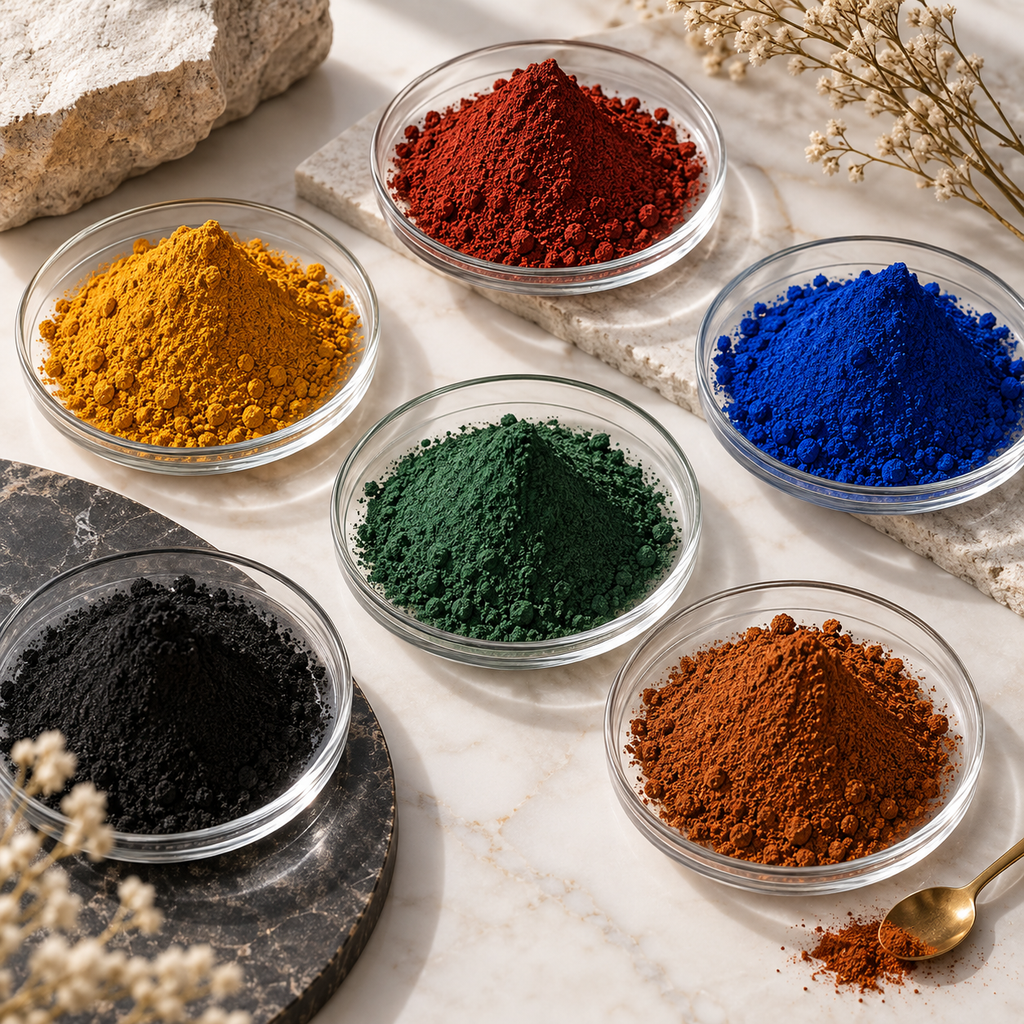
- Iron Oxide Pigments: Available in red, yellow, black, and brown, with different thermal stability depending on the grade.
- Chromium Oxide Green: Provides stable green coloration and excellent heat resistance.
- Titanium Dioxide: Offers high whiteness, brightness, and opacity.
- Mixed Metal Oxide Pigments: Provide specialized colors and thermal stability for demanding applications.
2. Why Are They Used in Plastics?
These pigments offer several advantages:
- Thermal Stability: Suitable grades resist color changes during processing.
- Color Consistency: Help maintain uniform coloration in finished products.
- Chemical Resistance: Provide stability in compatible polymer systems.
- Weather Resistance: Selected grades perform well in outdoor plastic applications.
- Durability: Support long-term color retention under suitable conditions.
3. Applications in Plastic and Masterbatch
Heat-stable inorganic pigments are commonly used in:
- Plastic injection molding.
- Extruded plastic products.
- Plastic pipes and fittings.
- Outdoor plastic furniture.
- Agricultural films and components.
- Colored masterbatch production.
- Industrial plastic packaging.
4. How to Choose the Right Pigment
Before purchasing, manufacturers should consider:
- Processing temperature and residence time.
- Polymer compatibility, such as PE, PP, PVC, or ABS.
- Particle size and dispersion performance.
- Tinting strength and color consistency.
- Thermal and weather resistance.
- Regulatory requirements for the intended application.
Laboratory processing trials are recommended to confirm pigment performance under actual production conditions.
Conclusion
Heat-stable inorganic pigments play an important role in plastic manufacturing and masterbatch production.
Their thermal stability, chemical resistance, and durable coloring properties make them suitable for various industrial polymer applications.
Selecting the appropriate pigment grade and testing its compatibility with the polymer system are essential for achieving consistent colors and reliable production quality.
