
Can Inorganic Pigments Be Used in Cosmetics?
Inorganic pigments are widely used in cosmetic products to provide color, opacity, and decorative effects. They are commonly found in foundations, face powders, eyeshadows, blushes, and other makeup products.
Their chemical stability, light resistance, and natural color range make them valuable ingredients in cosmetic formulations.
But can all inorganic pigments be used in cosmetics? No. Only pigments that meet the relevant cosmetic regulations, purity specifications, and application requirements should be selected.
1. Which Inorganic Pigments Are Used in Cosmetics?
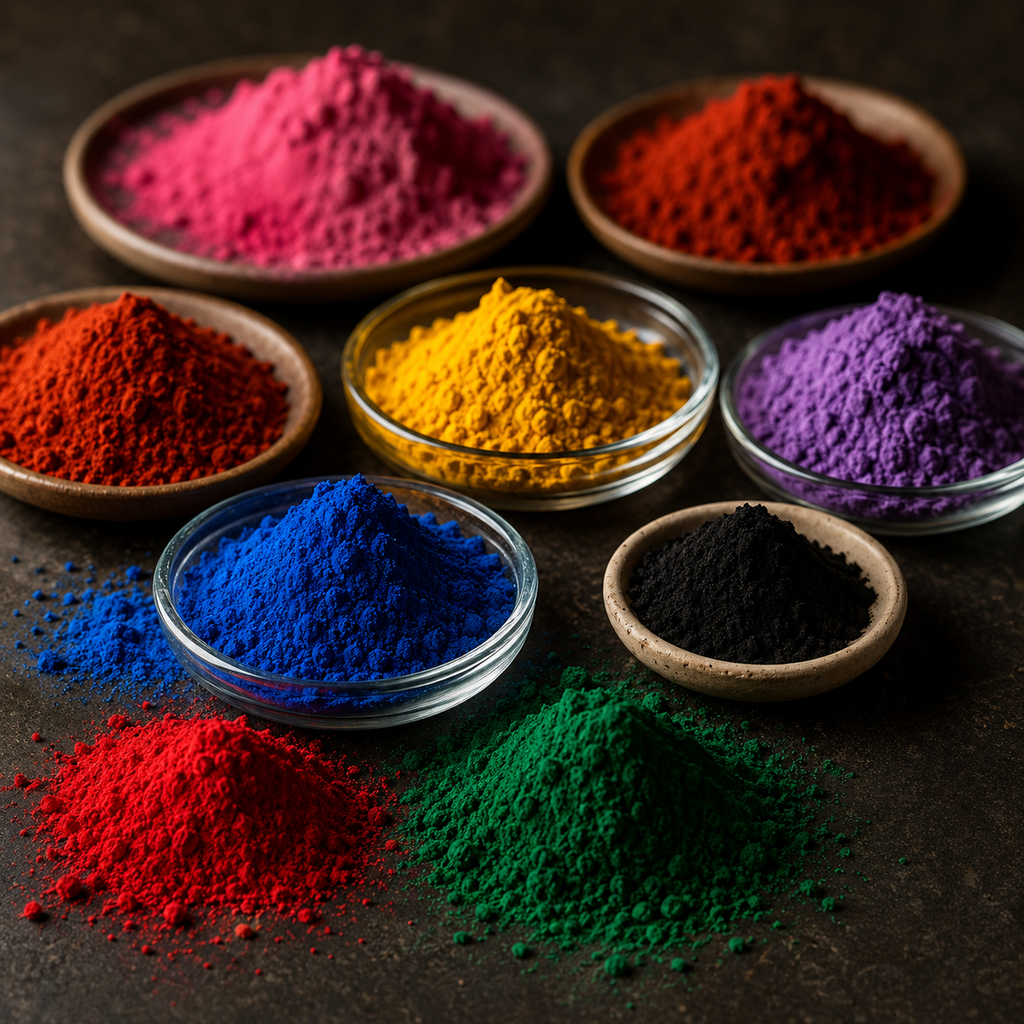
Several inorganic pigments are commonly used in cosmetic coloring.
- Iron Oxide Red (CI 77491): Provides red, pink, and warm brown shades.
- Iron Oxide Yellow (CI 77492): Creates yellow, beige, and golden tones.
- Iron Oxide Black (CI 77499): Produces gray and dark shades.
- Titanium Dioxide (CI 77891): Provides white coloration and opacity.
- Chromium Oxide Green (CI 77288): Used for green shades where permitted.
- Ultramarines: Provide blue and violet shades for selected cosmetic applications.
These pigments are particularly useful in decorative cosmetics because they offer good color stability and opacity.
2. Why Are Inorganic Pigments Suitable for Cosmetics?
Color Stability: Many inorganic pigments offer good resistance to light and heat.
Low Migration: Their insoluble particulate structure generally reduces color bleeding and migration.
Opacity: They provide effective coverage in foundations, powders, and other makeup products.
Color Versatility: Different pigment grades can be blended to create customized cosmetic shades.
Chemical Stability: Suitable grades maintain their properties under compatible formulation conditions.
3. What Should Manufacturers Consider?
Cosmetic pigment selection requires stricter quality control than ordinary industrial coloring applications.
Important considerations include:
- Purity: Control unwanted substances and heavy metal impurities.
- Particle Size: Ensure suitable particle characteristics for the intended cosmetic formulation.
- Dispersion: Prevent agglomeration and achieve uniform color.
- Skin Compatibility: Evaluate the safety of the finished formulation.
- Regulatory Compliance: Confirm that the pigment is permitted for the intended cosmetic application.
A pigment suitable for external skin products is not automatically approved for every cosmetic use, including eye-area applications.
4. Do Inorganic Pigments Need Cosmetic Certification?
Requirements depend on the destination market.
In the United States, the FDA lists iron oxides, titanium dioxide, and certain other inorganic pigments as color additives permitted for specified cosmetic uses under 21 CFR Part 73. These listed pigments are generally exempt from batch certification but must meet their applicable identity, purity, and use requirements.
In the European Union, cosmetic colorants must comply with Regulation (EC) No 1223/2009, particularly Annex IV, which lists permitted colorants and their applicable conditions.
Therefore, manufacturers should verify the exact Color Index (CI) number, pigment grade, purity specifications, and intended application before purchasing.
Conclusion
Inorganic pigments can be used in many cosmetic products, offering stable colors, good opacity, and versatile decorative effects.
Iron oxide pigments are particularly valuable for producing red, yellow, black, and brown cosmetic shades.
However, cosmetic applications require specially qualified pigment grades. Industrial pigment specifications alone cannot demonstrate cosmetic suitability.
By selecting compliant raw materials and conducting appropriate quality and safety assessments, cosmetic manufacturers can develop consistent and reliable colored formulations.
