
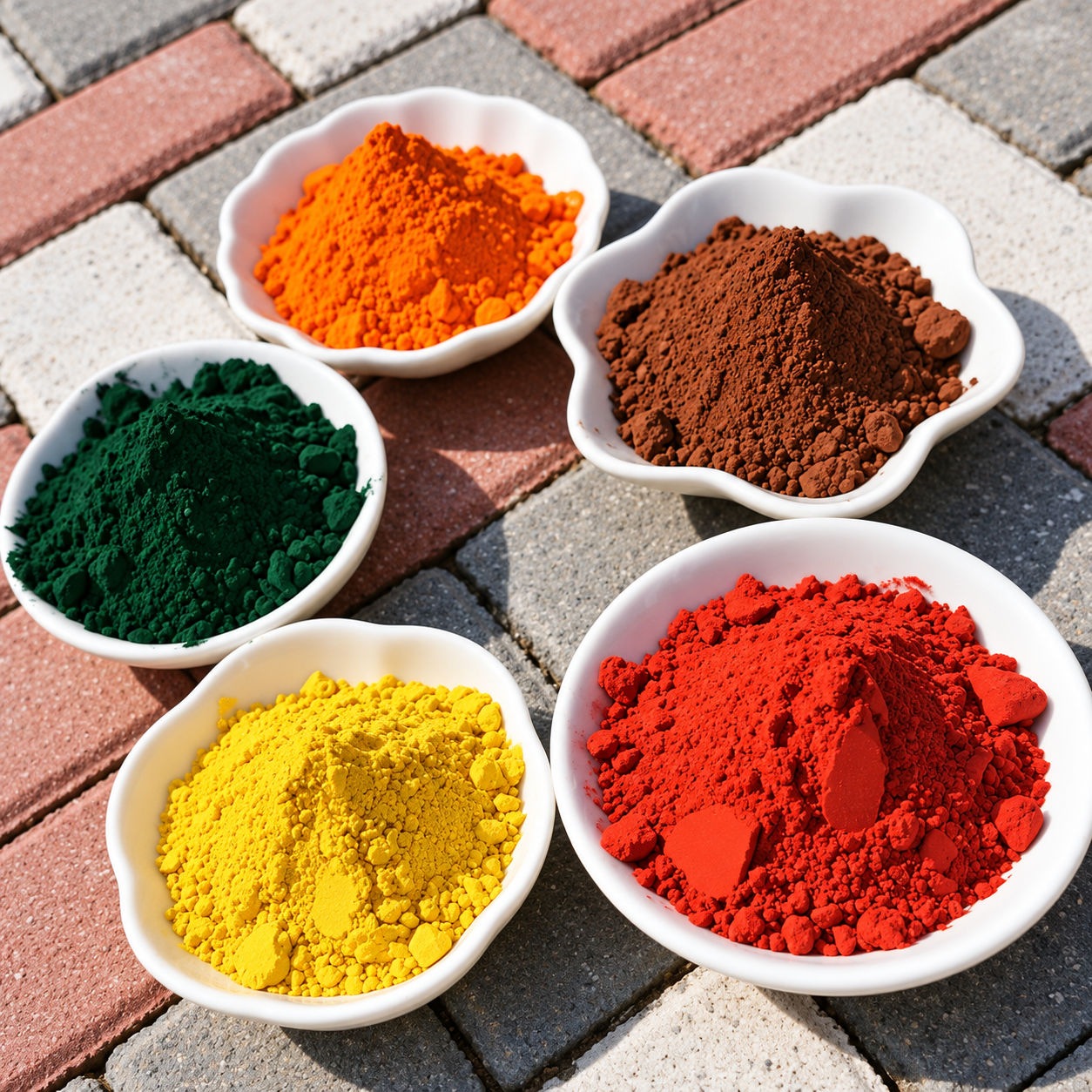
What Is the Tinting Strength of Iron Oxide Pigment?
Tinting strength is an important quality indicator for iron oxide pigments used in concrete, cement bricks, paving blocks, coatings and other construction materials. It describes a pigment’s ability to impart color to a base material at a specified concentration.
Higher tinting strength generally means that a pigment can produce stronger color with the same amount of pigment under comparable testing conditions.
1. What Affects Tinting Strength?
Several factors influence the tinting strength of iron oxide pigment:
- Particle size: Particle characteristics influence light absorption, scattering and color development.
- Pigment dispersion: Poor dispersion can reduce effective coloring performance and create uneven shades.
- Pigment quality: Manufacturing consistency and pigment characteristics affect color intensity.
- Application material: Cement, aggregate, resin and coating formulations can change the final color.
2. Why Is Tinting Strength Important?
For manufacturers, consistent tinting strength helps control pigment consumption, production costs and batch-to-batch color consistency.
For example, two iron oxide red pigments may look similar as dry powders but produce different color intensities when added to the same concrete formulation.
A pigment with higher tinting strength may achieve the target shade at a lower dosage, although the actual dosage must be confirmed through testing.
3. How Is Tinting Strength Tested?
Tinting strength is typically evaluated by mixing a measured quantity of pigment into a standardized base and comparing the resulting color with that produced by a reference pigment.
Testing conditions should remain consistent, including pigment dosage, mixing procedure and sample preparation.
For concrete applications, trial samples should use the actual cement and aggregate whenever possible, because the cured color may differ from the appearance of the pigment powder.
4. Tinting Strength vs. Color Consistency
These properties are related but not identical.
Tinting strength indicates how effectively a pigment develops color, while color consistency describes how closely its shade and coloring performance match the approved standard across batches.
A reliable iron oxide pigment should provide both suitable tinting strength and consistent production quality.
Conclusion
Tinting strength helps manufacturers evaluate the coloring efficiency of iron oxide pigment. It directly influences formulation decisions, pigment consumption and finished-product appearance.
When selecting a pigment, buyers should assess tinting strength, color shade, dispersion and batch consistency together. This approach helps achieve the required color while maintaining reliable production and cost control.
